
Trials in Australia and other countries are exploring how small doses of this addiction drug can alleviate Long COVID and ME symptoms, building on patient experiences.

Key points you should know:
- Naltrexone is a well-known drug for treating opioid and alcohol addiction.
- Known as Low-Dose Naltrexone (LDN), mini-dosages have long been used off-label to treat other diseases, including chronic pain and multiple sclerosis. Some people with Myalgic Encephalomyelitis (ME) and Long COVID report benefits from LDN, but clinical trials of the drug have been limited.
- New clinical trials, including one in Australia, are formally testing whether LDN can treat Long COVID. Tracking multiple symptoms over three months, the Australian study is designed to include severely ill patients. The next phase will include people with ME.
- The Australian trial builds on the study team’s recent work examining LDN’s effect on calcium ion channels in immune cells.
A drug developed in the 1960s to treat opioid addiction is being trialed as a potential treatment for Long COVID. The new trials provide an opportunity to formalize decades of patient experiences with this medication.
Taken in small doses – roughly 10% of the therapeutic dose for opioid dependence – Naltrexone has a long history as an experimental remedy for inflammatory, autoimmune, and pain-related diseases.
Known as Low-Dose Naltrexone (LDN), scaled-down dosages have been used off-label since the 1980s to treat Myalgic Encephalomyelitis (ME), chronic pain, Crohn’s disease, multiple sclerosis, HIV, and rheumatoid arthritis. Research suggests LDN can work in various ways to reduce a range of symptoms, including by regulating immune cells.
Despite its versatile prescribing history and strong safety profile, LDN’s evidence base remains patchy. To date, few clinical trials have tested the drug’s efficacy in treating illnesses that fall outside its officially licensed scope.
Observational studies suggest LDN may benefit some people with Long COVID and ME. People with these diseases have shared their experiences with LDN in online communities, reflecting the value of patient knowledge.
Now, LDN is attracting growing interest from researchers. Current clinical trials include a Long COVID study in Australia, a Spanish study focused on women with fibromyalgia, a U.S. study involving people with ME, and a Canadian study targeting fatigue in people with Long COVID.
Tracking a more expansive list of symptoms, the Australian LDN trial builds on prior work by the same lab examining links between Long COVID and ME. The study has been designed to include severely ill people, with participants taking part from home.
The study will also address one recurring challenge with LDN: getting the dose right. Anecdotally, the drug can affect people differently, and the dosage “sweet spot” can vary widely between individuals.
“Start low and go slow – that’s the advice,” said registered nurse Kate Herbert, from Emerge Australia, which provides advocacy, education, and biomedical research for Australians with ME and Long COVID.
Herbert first tried LDN several years ago, taking 1.5mg daily. It didn’t go well. “My first time was awful,” she recalls. “I couldn’t sleep, had horrific dreams. I was an anxious mess.” After two sleepless weeks, she gave up. Last year, at her pain doctor’s suggestion, Herbert decided to try LDN again – but at a lower dose. She now takes 0.25mg daily.
“This time around it’s been amazing,” she said. “For me, the main effect is a massive improvement in my sleep quality.” Previously, Herbert took a sleeping pill every night for ten years. Now she sleeps soundly without that medication. Her post-exertional malaise (PEM)/post-exertional symptom exacerbation (PESE) is less intense, and her heart rate variability and sore throat symptoms have both modestly improved.
Australia’s LDN trial builds on prior research
Scientists from Griffith University’s National Centre for Neuroimmunology and Emerging Diseases (NCNED) are recruiting 100 people with Long COVID for the Australian trial. Fifty patients will take a daily dose of LDN, with the other half randomly assigned to a placebo group. Researchers will track patients’ symptoms and quality of life over three months, comparing the results with 50 healthy people. Afterward, the placebo group will have the option to start taking LDN.
“We’re looking at a plethora of symptoms that are typical of Long COVID,” said Dr. Natalie Eaton-Fitch, from the research team. They will monitor cognitive function, pain, sleep, and fatigue, along with immune, gut, cardiovascular, respiratory, and other symptoms.
Naltrexone was first approved for opiate addiction and alcohol dependence in the 1980s and 1990s respectively. Other uses remain off-label. At higher doses it’s an opioid blocker, while the low-dose version can reduce inflammation, promote wound healing, slow tumor growth, and modulate the immune system.
The Australian study looks at LDN’s effect on immune cells. It builds on a growing body of work by NCNED scientists, who focus on three diseases: ME, Long COVID, and Gulf War Illness. Their goal is to better understand these diseases, explore overlaps, and develop effective diagnostic tools and treatments.
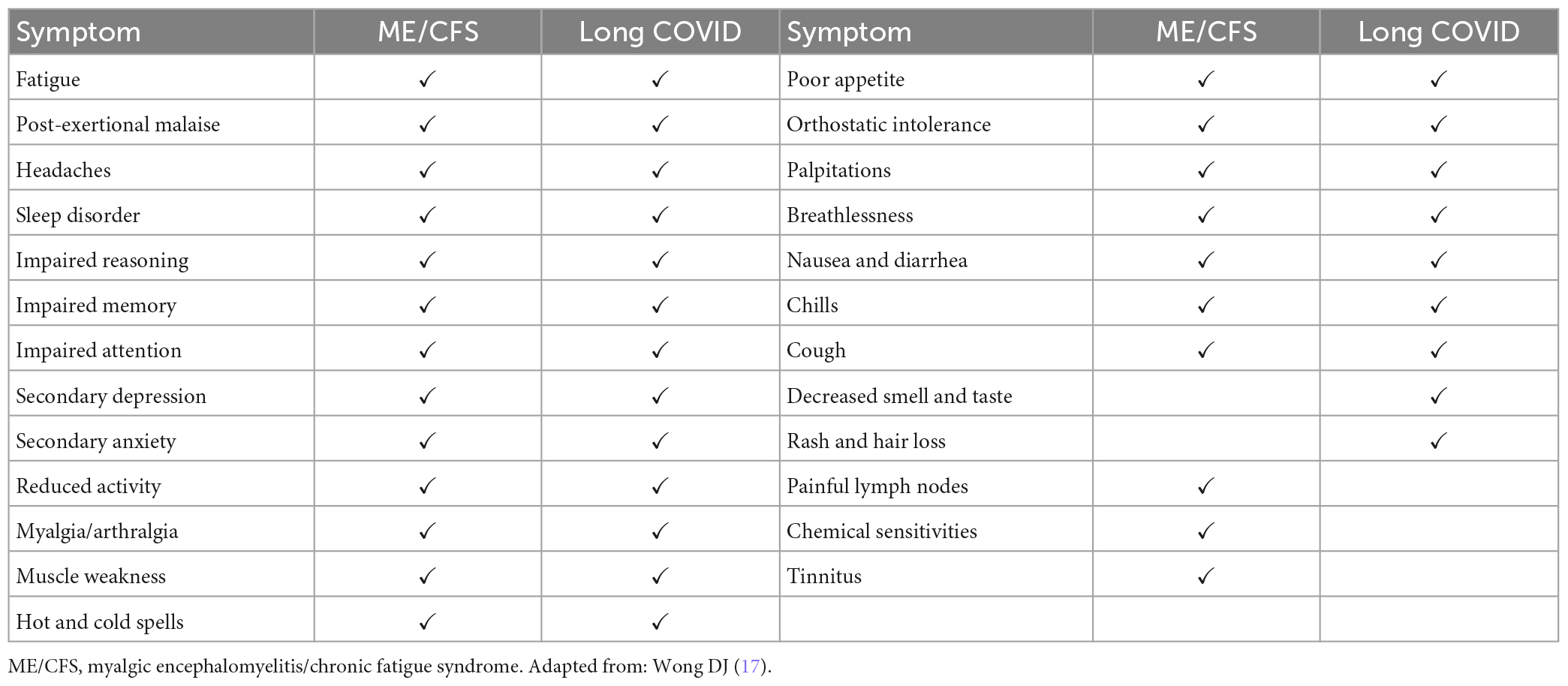
“Researching ME/CFS gave us a head start on studying Long COVID,” said Eaton-Fitch. Many people with Long COVID meet the criteria for ME. In a recent MRI study, Eaton-Fitch and her colleagues found the same neurochemical imbalances in the brains of Long COVID and ME patients. An earlier study looking at natural killer cells – part of the immune system – identified another shared disease mechanism: faulty ion channels that move calcium into cells.
“Calcium is like the fuel for your engine – it activates cell functions,” Eaton-Fitch explained.” Her team discovered that the ion channels in both ME and Long COVID patients are jammed shut: “That door isn’t opening, so fuel can’t get into the cell.” Recently they found the same malfunction in patients with Gulf War Illness.
When they tested LDN’s effects on cells from people with ME and Long COVID, the researchers discovered that the drug “unlocked” those faulty ion channels, allowing vital calcium back inside the cell. The new clinical trial is the next step in this chain of evidence-based research.
Including people with severe symptoms
While the trial’s first phase focuses on people with Long COVID, overlapping symptoms mean a subset of participants may also have ME. The disabling impacts of these diseases often exclude severely ill patients from taking part in research, which means study results present an incomplete picture.
The new LDN trial deliberately includes these patients. “People can participate from home, [so] we can include more of the severely ill patient cohorts,” said Eaton-Fitch. Medications are mailed out and symptoms are tracked online. The study also targets patients who experience PEM/PESE, a hallmark feature of ME and a common Long COVID symptom.
“It’s very difficult for people with more severe [illness] to participate in research,” said Herbert. “So the more studies that build accessibility into their study design, the better.”
Study partner Dr. James Jarman will consult with participants by phone. A pain specialist and anesthesiologist, Jarman has been prescribing LDN to his fibromyalgia patients for a decade.
“The first script I wrote was for a young woman with widespread pain, fatigue and inflammation,” Jarman recalled. His expectations were low. But two months later, the patient reported back. “She [said], ‘This drug has changed my life.’ She was back at uni, back working.”
Jarman said about 30 percent of his fibromyalgia patients report a “mild to moderate” positive effect from LDN. Another 30 percent report “dramatic improvement, with reduced pain, less intense fatigue, or better-quality sleep, Jarman said. But for the remaining people, LDN does “nothing at all”.
Clinical trials are expensive, and generic drugs like Naltrexone are seldom big money-spinners for pharmaceutical companies. Off-label medicines like LDN can also carry out-of-pocket costs for patients, including charges for compounding (preparing customized doses). Despite this, LDN is attracting growing attention from patients, doctors, and researchers.
The more studies that build accessibility into their study design, the better.
Kate Herbert
Learning from lived experience
For historically under-researched diseases, lived experience can highlight potential areas for future study. In LDN’s case, experimental use by people living with ME and Long COVID has helped drive interest in new clinical trials.
“In the U.S., almost every Long COVID clinic is using LDN,” said Dr. Hector Bonilla, an infectious disease doctor at Stanford University. “Listening to patients’ experiences is very important,” Bonilla said. It was people attending Stanford’s ME/CFS clinic who first alerted him to LDN’s potential. “[ME/CFS patients] told me, ‘LDN is helping me.’ And I thought, ‘Oh, interesting.’”
When Stanford’s Long COVID clinic opened in mid-2021, with Bonilla as co-director, he followed his patients’ lead: “I said, ‘Let’s offer people LDN. It’s low dose, very cheap, very safe. Let’s try and see what happens.”
Nine months later, Bonilla’s team used patient data to run an observational study looking at LDN’s effects on Long COVID symptoms. Around one-third of their patients had significant improvements in fatigue, PEM/PESE, and sleep quality. The researchers then called for rigorous clinical trials to further investigate LDN.
Bonilla will follow the Australian LDN trial with interest. “The link with Natural Killer cells is very interesting. It’s important for us to understand the interaction between the immune system and the infection.”
The Australian study is a double-blinded, randomized controlled trial (RCT) – the “gold standard” for evidence-based research. Patients start on 1.5mg daily, titrating (slowly adjusting) up to 4–6mg, or the maximum tolerated dosage. Initial data should be out by early 2025. The next phase will include people with ME.
Another RCT in Canada is investigating whether LDN can reduce fatigue in Long COVID patients with ME/CFS-like symptoms. Doses will be titrated from 1mg to 4.5mg daily, or the maximum tolerated dose.
Other current RCTs include a Spanish study testing LDN’s effects on female patients with fibromyalgia, and a Harvard University study investigating how ME/CFS patients respond to LDN and/or Mestinon, a drug used to treat the autoimmune disease myasthenia gravis.
“It’s great to see serious treatment options being investigated, using what sound like more robust study designs than we’ve seen previously,” said Herbert. But like many people living with long-term chronic illness, she’s keeping her expectations in check. She has witnessed previous observational studies “where a treatment looks really promising,” followed by clinical trials that have disappointing results.
“I’m cautiously optimistic,” said Herbert. “But as a patient, the proof’s in the pudding. We’ll have to wait and see whether these studies will actually benefit patients at the coalface.”
I’m cautiously optimistic. But as a patient, the proof’s in the pudding.
Kate Herbert
Dr. Meg Mundell is a New Zealand-born journalist, novelist, and social researcher based in Australia. Her books include The Trespassers and We Are Here: Stories of Home, Place and Belonging. Meg lives with ME, POTS, and MCAS. Twitter/X: @MegMundell.
All articles by The Sick Times are available for other outlets to republish free of charge. We request that you credit us and link back to our website.


Leave a Reply